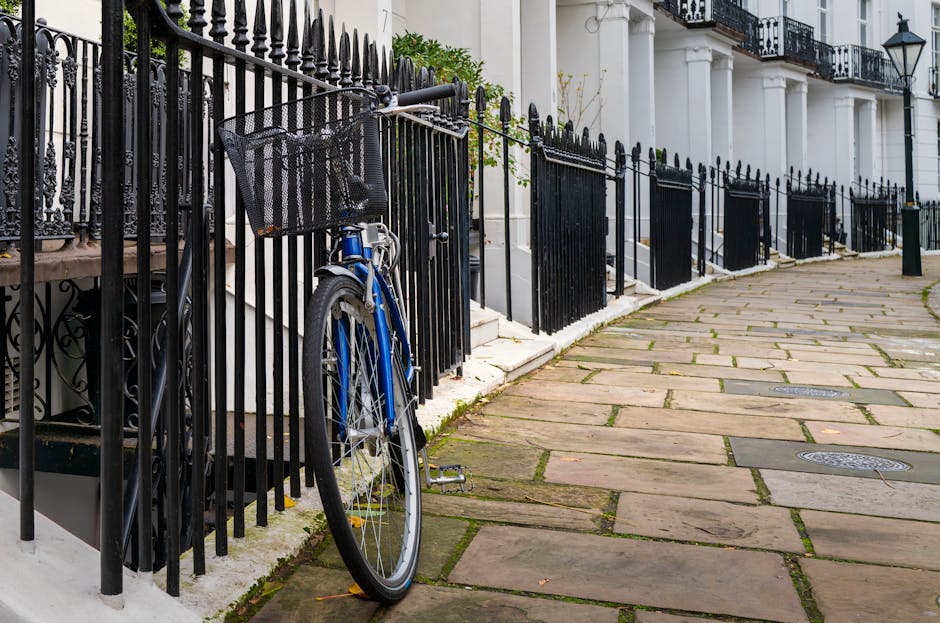
Narrow stair access tips for West Kensington removals

Moving house in West Kensington can be tricky enough without having to wrestle a sofa around a narrow staircase, a tight landing, and a front door that seems just a bit too small on moving day. If you are planning a move into or out of a flat with awkward stair access, the difference between a smooth job and a stressful one usually comes down to preparation. These Narrow stair access tips for West Kensington removals are designed to help you plan properly, protect your belongings, and avoid the kind of last-minute panic that nobody needs.
In this guide, we will walk through what narrow stair access really means in practice, how to assess it, what to pack differently, which items are most likely to cause problems, and when it makes sense to use storage as part of the move. You will also find a checklist, a comparison table, and some straightforward advice on safety, compliance, and common mistakes. Let's face it, stairs do not care how expensive the sofa was.
Why narrow stair access matters
Narrow staircases change almost every part of a removal. They affect what can be carried, how many people are needed, how long loading takes, and whether furniture should be dismantled before the move starts. In West Kensington, where you often see period conversions, maisonettes, and upper-floor flats, stair access can be tight in a very real-world way: sharp turns, low ceilings on landings, wall edges that chip easily, and awkwardly placed banisters that seem to lean into the route rather than out of it.
Why does this matter so much? Because a move that looks manageable on paper can become slow, risky, and more expensive if access is underestimated. A wardrobe that fits through one doorway may still fail at the turning point halfway up the stairs. A mattress may bend enough to pass, while a chest of drawers catches on the handrail. That is the point where good planning saves time, money, and a few nerves.
There is also the issue of damage. Narrow stairs make it more likely that furniture scrapes paintwork, knocks skirting boards, or chips the edges of steps. The more crowded the stairwell, the more important it becomes to control the route, protect surfaces, and avoid rushing. In our experience, people often focus on the largest room in the flat and forget the staircase itself is the bottleneck. It usually is.
Table of Contents
- Why narrow stair access matters
- How narrow stair access works
- Key benefits and practical advantages
- Who this is for and when it makes sense
- Step-by-step guidance
- Expert tips for better results
- Common mistakes to avoid
- Tools, resources and recommendations
- Law, compliance, standards, or best practice
- Options, methods, or comparison table
- Case study or real-world example
- Practical checklist
- Conclusion
- Frequently Asked Questions
How narrow stair access works
A narrow stair move is all about sequencing. The route matters just as much as the item being moved. First, the mover or homeowner checks whether an object can be taken down or up the stairs intact. If not, it may need dismantling, rewrapping, or moving in stages. Sometimes the safest answer is not to force the item at all, but to store it temporarily while the rest of the property is cleared.
The basic process usually goes like this:
- Measure the stairwell, landing, door widths, and any turns.
- Identify bulky or fragile items that may need special handling.
- Decide what should be dismantled, wrapped, or carried separately.
- Clear the route so the staircase is free of clutter, loose items, and trip hazards.
- Protect the walls, banisters, and flooring where contact is likely.
- Move the easiest items first to test the route and establish a rhythm.
- Keep communication short and clear so nobody gets stuck halfway up the stairs with a wardrobe and a bad mood.
That sequence sounds simple, but it works because it breaks a hard job into smaller decisions. The more you can reduce uncertainty before lifting begins, the better the whole move tends to go.
If you are also trying to organise storage during a move, it can help to look at pricing and quotes early so you can decide whether you need short-term space for furniture that will not fit neatly through the stairwell on moving day.
Key benefits and practical advantages
Good stair access planning does more than prevent frustration. It can make the move noticeably safer, cleaner, and less expensive overall. Here are the main benefits people tend to notice.
- Less risk of damage: careful route planning reduces scrapes on walls, paintwork, and furniture corners.
- Faster loading and unloading: when the route is clear, movers spend less time stopping and restarting.
- Lower stress: there is a huge difference between "we've got this" and "how on earth is that sofa still on the landing?"
- Better protection for bulky items: items can be padded, dismantled, or wrapped before they hit the tightest part of the staircase.
- More predictable costs: fewer delays usually means fewer surprises on the day, especially where labour time matters.
- Safer manual handling: narrow stairs are one of the places where people are most likely to twist, strain, or lose balance if they rush.
For West Kensington removals specifically, there is also a local advantage: many buildings in the area have access quirks that are easy to miss during a quick viewing. A flat can look spacious, but the shared stairwell tells a different story once a bed base or fridge gets involved. That is where a bit of local awareness really pays off.
Expert summary: If the staircase is narrow, treat access as part of the move itself, not just a route between rooms. Measure it, protect it, and plan around it early.
Who this is for and when it makes sense
These narrow stair access tips are useful for almost anyone moving in West Kensington, but they matter most if you are dealing with one or more of the following:
- upper-floor flats with shared stairwells
- older buildings with steep or curved stairs
- tight turns on landings
- large furniture such as wardrobes, sofas, and divan bases
- high-value items that should not be scratched or bent
- moves where the building has limited lift access or no lift at all
- short-notice removals where packing is already under pressure
This advice also makes sense if you are moving out of a rented flat and want to leave the property in good condition. A narrow staircase can quickly become a source of accidental damage, which is exactly the sort of thing nobody wants to argue about later. If the property has specific building rules, it is worth checking the terms and conditions for any service you are using so you understand what is expected before move day.
Truth be told, some people only realise they need this guidance when the sofa is already wedged sideways on the stairs. Better to be the person who measured first.
Step-by-step guidance
Here is a practical way to prepare for a move with narrow stair access. It is simple enough to follow, but detailed enough to be genuinely useful.
1. Measure the route, not just the room
Measure the width of the staircase, the width of landings, the height under any overhead features, and the narrowest doorway on the route. A tape measure helps, but so does taking photos from different angles. One of the most common surprises is a turn that looks fine in a straight line and then becomes impossible once the item reaches the corner.
2. Identify problem items early
List the objects most likely to cause trouble: sofas with fixed arms, beds with solid bases, wardrobes, bookcases, mirrors, large mirrors especially, washing machines, and bulky office chairs. If something is awkward before it moves, it will usually be awkward in the stairwell too. No mystery there.
3. Decide what should be dismantled
Can the item come apart safely? If yes, dismantle it before the move, keep the screws and fittings in labelled bags, and tape those bags to the relevant item. A flat-pack wardrobe left in one piece may feel quicker to move, but if it catches on a turn, you lose the time you thought you were saving.
4. Pack for shape, not just for volume
Items that fit in boxes can still be hard to carry if the boxes are too wide or too heavy. Use smaller boxes for books, keep fragile items cushioned, and avoid oversized boxes that become impossible to grip on the stairs. Packing by shape matters more than many people realise.
5. Clear the stairwell completely
Remove mats, shoes, plant pots, coat racks, children's toys, and any loose clutter near the stairs. A clean route reduces trip risk and makes communication easier. If the stairwell is communal, do a quick check that you are not blocking neighbours. It sounds obvious, but on moving day obvious things are the first to disappear.
6. Protect contact points
Use blankets, corner protectors, and temporary coverings where furniture is likely to brush against walls or bannisters. Focus on the bends, not just the straight sections. Most scrapes happen at the turn, where everyone is concentrating a bit too hard.
7. Move in the right order
Start with items that are easiest to carry and least likely to snag. This helps the team get a feel for the staircase and check whether the route behaves differently than expected. Then move to the larger pieces once the route is understood.
8. Keep one person in charge of communication
A staircase is not the place for four people giving separate instructions at once. Pick one lead voice. "Stop," "tilt," "pivot," and "lift" should mean something very clear. A short pause can prevent a damaged wall or a strained back.
9. Use storage if the item is not a good fit
Sometimes the sensible decision is to move some belongings into storage and deal with them later. That can be especially helpful if the new place is not ready, if you are downsizing, or if one large item simply will not pass the stair test. You can learn more about the business behind that kind of support on the about us page and use the contact page to ask questions before the move.
Expert tips for better results
Once the basics are covered, a few small choices can make narrow stair access much easier. These are the kind of things that separate a stressful move from one that feels under control.
- Test with the biggest item first. If the sofa fits, smaller items usually become simpler. If the sofa does not fit, you have learned early enough to adapt.
- Use furniture sliders only where they are appropriate. They can help on floors, but stairs need control, not speed.
- Keep bolts, handles, and shelves together. Missing parts turn unpacking into an unnecessary treasure hunt.
- Wrap corners twice. A single blanket is often not enough on a tight turn.
- Plan for weather too. A wet entrance mat and muddy shoes can make a narrow staircase more hazardous than expected, especially in the evening when it is already dim.
- Do not rely on "it should just fit." Should is a dangerous word in removals.
A practical local tip: if you are moving around school-run time or early evening in West Kensington, you may find the building feels busier and the stair route tighter than normal. People come and go, doors open, prams appear, someone needs to pass. The move itself may be fine, but the flow around it changes. Plan for that.
If your move involves payments or deposits, make sure you understand the service provider's payment and security information so there are no awkward surprises later. Small detail, yes. But useful.
Common mistakes to avoid
Most stair-access problems are avoidable. The trouble is, people often make the same handful of mistakes because they seem harmless at the time.
- Not measuring the landing. The straight part of the stairs might be fine, but the corner catches the item.
- Leaving packing until the last minute. Rushed packing creates bulky, uneven boxes that are awkward on stairs.
- Forgetting about door handles and radiators. Those little protrusions can cause a real nuisance.
- Carrying too much at once. It saves nothing if the item becomes unstable halfway up.
- Ignoring shared access rules. In a communal building, keeping the stairwell tidy and courteous matters more than people think.
- Assuming the cheapest option is the best option. If access is difficult, the lowest price can become poor value once delays and damage are factored in.
One very human mistake: people often fall in love with the idea that "we'll just angle it a bit." Sometimes that works. Sometimes it is the beginning of a surprisingly long afternoon.
Tools, resources and recommendations
You do not need a warehouse full of kit to handle a narrow staircase, but a few practical tools make a big difference. The goal is control, not clutter.
| Tool or resource | What it helps with | When to use it |
|---|---|---|
| Tape measure | Checking stair width, landing space, and furniture dimensions | Before packing and before move day |
| Furniture blankets | Reducing scuffs on walls, bannisters, and furniture edges | During carrying and turning |
| Corner protectors | Shielding vulnerable edges on tight turns | Where items are likely to clip surfaces |
| Strong labels | Keeping dismantled parts and box contents organised | During packing and reassembly |
| Small boxes | Making heavy items easier to carry safely | Especially for books, tools, and kitchenware |
| Storage plan | Handling items that cannot fit cleanly through the stair route | When access is too tight or timing is uncertain |
For practical support around moving safely and looking after belongings, the site's health and safety policy and insurance and safety information are sensible places to review before you book anything. If you are trying to keep the move environmentally sensible as well, there is also a useful recycling and sustainability page that may help you think through unwanted items and disposal choices.
Law, compliance, standards, or best practice
Narrow stair access is not just a practical issue; it also intersects with safety and good moving practice. In the UK, anyone carrying heavy or awkward items should think about manual handling carefully. You do not need to quote legislation to understand the principle: if an item is too large, too heavy, or too unstable for the route, it should be handled differently. That might mean dismantling, using more people, or moving it into storage first.
For shared buildings in West Kensington, it is also sensible to be respectful of communal areas. Keep stairwells clear, avoid blocking exits, and minimise disruption where possible. If building management has its own access rules, follow them. That is just basic courtesy, but it also avoids complaints later.
Insurance is another area people often overlook. Before move day, check what is covered, what is excluded, and what condition items need to be in. If you want to understand that side of things in plain English, the insurance and safety page is a sensible starting point. And if you need help understanding how a company handles concerns or service issues, the complaints procedure is worth reading too. Nobody wants to use it, of course, but it is good to know it exists.
For accessibility-related concerns, especially if the staircase or building layout creates extra difficulty, it can be helpful to review the accessibility statement. That gives a clearer idea of how barriers and access needs are approached.
Options, methods, or comparison table
There is more than one way to manage narrow stair access. The right method depends on the item, the building, the timing, and how much stress you want to carry with you. Frankly, not all options are equal.
| Approach | Best for | Advantages | Limitations |
|---|---|---|---|
| Carry in one piece | Light or compact items | Fast and simple | Fails quickly if the route is tight |
| Dismantle first | Wardrobes, bed frames, shelving | Improves fit and reduces damage risk | Needs time, tools, and organisation |
| Use extra wrapping and team lifting | Medium-size fragile items | Better control on turns | Slower and may still be awkward |
| Store temporarily | Bulky items or uncertain move dates | Reduces pressure on move day | Adds an extra step to the move |
For many West Kensington removals, the best answer is a blend of methods. A sofa may be dismantled, a mirror wrapped and carried separately, and a cabinet placed into storage until the new place is ready. That is not overplanning. It is just smart.
Case study or real-world example
Imagine a two-bedroom flat on an upper floor in West Kensington with a narrow staircase and one awkward left-hand turn midway up. The residents have a sofa, a double bed, a large shelving unit, and several boxes of books. On first glance, the move seems manageable. But once the shelving unit is measured against the stair turn, it becomes clear that it would need dismantling to pass safely.
Instead of waiting until moving day, the residents sort the furniture a week earlier. They dismantle the shelving, label the parts, and wrap the shelving panels separately. The sofa is checked against the staircase and taken apart at the feet and arms, which makes a real difference. The books are repacked into smaller boxes because the original boxes were too heavy for comfortable carrying. A few seasonal items that are not needed straight away are placed into storage so the new flat does not feel cluttered on arrival.
The result is not dramatic, but it is exactly what good removals should look like: fewer delays, less strain, and no damage to the stairwell. The move still takes effort, naturally. But the effort is organised, and that changes everything. By late afternoon, the place smells like cardboard, tape, and fresh paint rather than stress. Which, honestly, is a win.
Practical checklist
Use this checklist a few days before move day if your property has narrow stairs.
- Measure stair width, landing space, and the tightest turning point.
- Measure the largest furniture items in all relevant dimensions.
- Decide which items can be dismantled safely.
- Gather blankets, tape, labels, and basic protective materials.
- Pack heavy items into smaller boxes.
- Clear the stairs, landings, and entrances of clutter.
- Check whether any item needs temporary storage.
- Review insurance, safety, and payment details in advance.
- Confirm access times and building rules.
- Assign one person to give lifting instructions.
- Keep pathways dry and well lit where possible.
- Leave a little extra time for turns, pauses, and unexpected snags.
If you would like to understand more about how the company behind this site works, you can also look at the about us page for background and the privacy policy if you are checking how your details are handled. Small things, but reassuring ones.
Conclusion
Narrow stair access does not have to derail a removal in West Kensington. With careful measuring, smart packing, sensible dismantling, and a clear plan for the staircase itself, even a tight route can be managed calmly. The biggest mistake people make is treating access as an afterthought. Once you start treating it as part of the move, the whole process becomes more predictable.
That is really the heart of it. Plan the route, protect the building, respect the limits of the stairwell, and do not be shy about using storage if it makes the move easier. It is not about making the move perfect. It is about making it workable, safe, and a lot less stressful.
Get a free quote today and see how much you can save.
If you still have questions or want to talk through a difficult access point before moving day, the best next step is to reach out and get tailored guidance rather than guessing. A short conversation now can save a very long stair-climb later.
Frequently Asked Questions
How do I know if my staircase is too narrow for removals?
Measure the narrowest point, the landing, and the turning space, then compare them with the size of your largest item. If the item cannot be turned comfortably without forcing it, the staircase is probably too narrow for a direct carry.
Should I dismantle furniture before a move in West Kensington?
If the item is large, heavy, or awkward to turn, dismantling is usually the safer choice. Wardrobes, bed frames, shelving units, and some sofas often move far better in sections.
What items cause the most trouble on narrow stairs?
Sofas, mattresses, wardrobes, cabinets, washing machines, mirrors, and anything long but rigid tend to be the most awkward. Sometimes it is the shape more than the weight that causes the issue.
Can storage help if my new place has tight stair access?
Yes. Temporary storage is useful when an item cannot be moved safely, when there is a delay between moves, or when you need to clear one property before another is ready.
How much extra time should I allow for a narrow stair move?
It depends on the building and the furniture, but you should allow more time than a straightforward flat move. Tight turns, extra wrapping, and careful lifting all slow things down, and that is normal.
Do I need special equipment for narrow stair access?
Not always, but furniture blankets, labels, tape, and protective coverings are very helpful. For some moves, more than one person and a clear lifting plan matter more than fancy kit.
What should I do first on moving day?
Check the staircase is clear, protect the likely contact points, and move the easiest items first. This helps establish the route and reduces the chance of a panic-driven mistake later.
Is it safer to carry boxes one at a time on stairs?
Usually yes, especially if the staircase is narrow or steep. Smaller, lighter boxes are easier to balance and less likely to cause injury or damage.
What if the furniture fits but the landing does not?
That is a common problem. The landing is often the place where items jam. If the landing is too tight, the furniture may need to be dismantled or moved in a different orientation.
How do I protect walls and bannisters during a move?
Use blankets or padding at the points where furniture is most likely to brush against surfaces, especially on corners and turns. Taking it slowly on the bend helps as much as the padding itself.
Should I tell the removals team about narrow stairs in advance?
Absolutely. The more they know beforehand, the better they can plan for access, equipment, time, and any items that need special handling.
Where can I check safety and policy information before booking?
Useful starting points include the health and safety policy, the insurance and safety information, and the terms and conditions. Reading them first is not glamorous, but it does help.